The Misheard Version wins two Grand Prix Lions

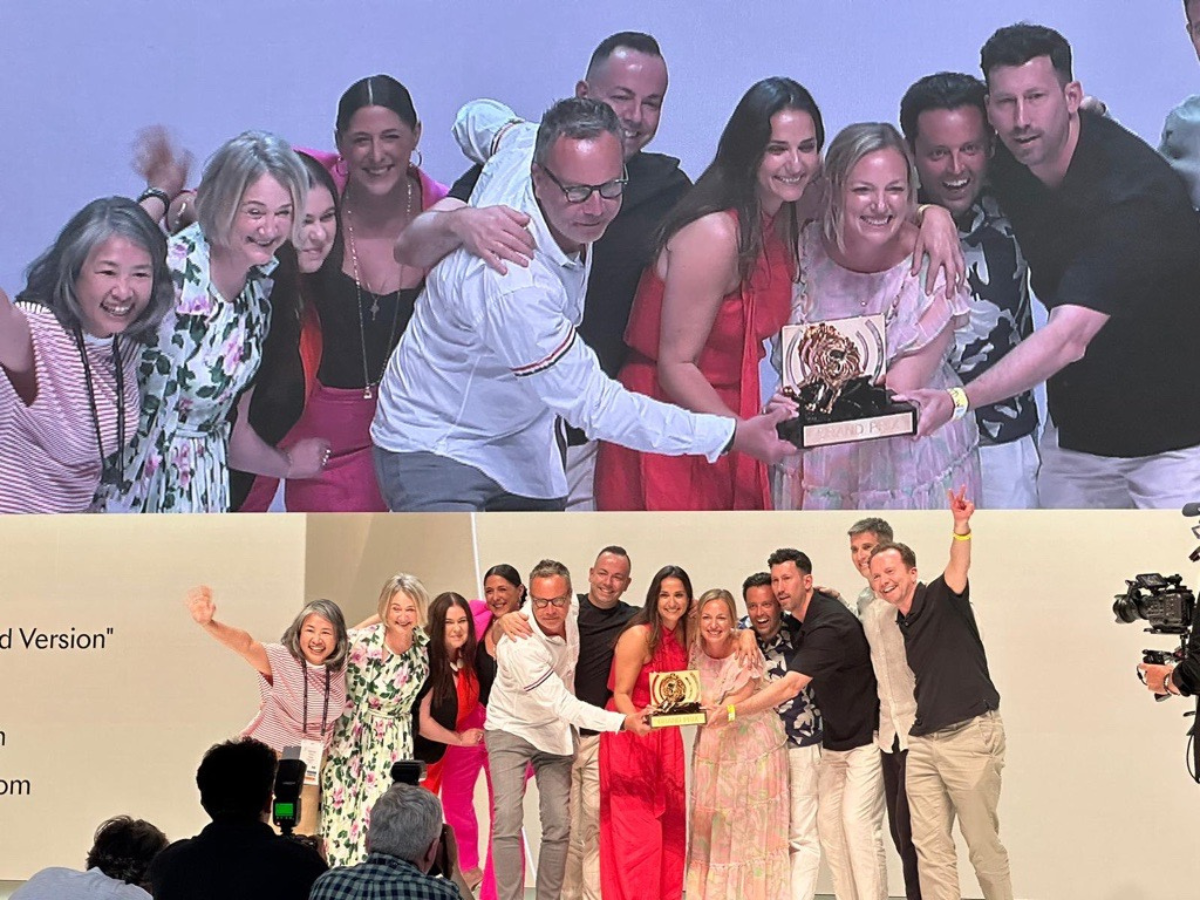
We are so proud to announce that our ground-breaking work for Specsavers has won six awards at the 2024 Cannes Lions International Festival of Creativity, including two highly prestigious Grand Prix. The creative campaign, which we worked on alongside our sister agency, Golin, also won a Gold Lion and three Silver Lions across the Audio & Radio Lions, PR Lions and Health & Wellness Lions.

In fact, the Grand Prix in the PR Lions made history for Golin and Virgo, as we became the first-ever PR agency to win PR Lions Grand Prix awarded for our creative idea.

In a bold move to address hearing loss, we transformed one of the most famously misheard songs into an unavoidable nationwide hearing test. Partnering with singer Rick Astley, we re-recorded his 80’s smash hit “Never Gonna Give You Up” with intentionally incorrect lyrics. Within eight hours, over 20 million people played the new “misheard” version, doubling online searches related to hearing loss and propelling it to a nationally trending topic in the UK on Google. Specsavers exceeded its hearing test booking target by an unprecedented 1220%.

WATCH THE CASE FILM HERE

Cannes Lions Audio & Radio jury president and chief creative officer at Colenso BBDO, New Zealand, Simon Vicars, shared the jury’s verdict, saying: “The Misheard Version by Specsavers is a brilliant example of creativity turned up to 11. A nationwide hearing test, disguised inside an iconic song. Creative to its core and recklessly ambitious in its execution. It powered business results and broke into culture. Thank you, Specsavers for making us laugh, for committing properly to this idea and for making our jury’s biggest decision an easy one.”

Al Wood, chief creative officer at Golin London, reveled at the work’s impact: “An incredible result. This was an earned-first idea that started in laughter, but ended up changing how Brits hear. It owes its success to so many people – and it means the world to see that collective work recognised and celebrated on such a global stage.”
MEDCOMMS DAY 2024: MY STEPS INTO A MEDCOMMS CAREER

This MedComms day 2024 we asked Nicole Scullion, Senior Medical Writer here at Virgo Health to tell us about her journey into the world of Medical Communications and what a typical day might look like.  

Describe your role to a friend… 

Medical writing involves working with pharmaceutical companies to help educate doctors, patients and the public on their products in a number of different ways. For example, through the creation of educational materials or at events such as congresses. While you are often sitting at a desk researching or developing content, you also have the opportunity to travel.  

What area of MedComms do you work in? 

In my current role I cover three therapy areas: surgical imaging, immunosuppression post-organ transplantation and oncology (neuroendocrine cancer). At Virgo, I have also had the opportunity to explore additional areas such as women’s health and nephrology. Within these therapy areas, my work spans various medical education projects, including advisory boards, symposia and the development of educational materials such as core decks, publication summaries and infographics.  

A typical day at work? 

My daily routine varies based on client needs and upcoming events. As a mostly remote worker, I connect with internal teams, have client calls and create or edit materials from home. Currently, I am focusing on finalising content for a symposium taking place in the Netherlands this week.  

When I visit the office, this provides an opportunity to attend training, brainstorms and team meetings in person. It also gives me the chance to catch up with team members that I may not interact with daily. 

What 3 skills are most important to your role: 

  • Attention to detail 
  • Communicating confidently with your team and with clients 
  • Being able to interpret data in a creative way 

How would you describe MedComms? 

MedComms is a very dynamic and varied industry which serves as the link between the scientific community, pharmaceutical companies, healthcare professionals, patients and the wider public. While translating complex scientific information, MedComms allows for creativity, collaboration and strategic thinking. 

How did you land on a med comms career? 

I attended the University of Liverpool to study a BSc (Hons) degree in Biological Sciences, followed by an MRes degree in Biomedical Sciences and Translational Medicine, with a focus on oncology and uveal melanoma. After completing my master’s degree in 2019, I discovered medical writing while searching ‘jobs for biology graduates’. My journey began over four years ago as a Trainee Medical Writer, soon progressing to Associate Medical Writer, Medical Writer and joining Virgo in August 2023 as Senior Medical Writer. 

What advice would you give people interested in MedComms careers? 

For anyone starting a career in MedComms, I would recommend networking and connecting with professionals already working in MedComms to seek advice and learn about their experiences. LinkedIn is a great tool for this as you can connect with so many people in the industry (including recruiters) and find out about MedComms specific events.  

I would also advise preparing as much as you can for the application process as this typically involves a few interview rounds in addition to a writing test.  

My final piece of advice is that starting a new career can be challenging, so give yourself grace during this time. It may be daunting at first and it may not ‘click’ immediately, but as you settle in, you will find your rhythm and purpose.   

Lastly, tell us something surprising about yourself! 

I am not an outdoorsy person at all, however, I forced myself to climb Mount Kilimanjaro!   

A fresh perspective on data comms 

Data Comms sits at the core of our industry, so it’s time to inspire more communicators about the dynamic role it plays in healthcare communications

By Lizzie Wright, Executive Director and Laura Strain, Executive Vice President.

Data sits at the heart of our work in pharmaceutical communications, flowing into and influencing everything that we do on a daily basis. It is critical that to run a successful campaign, we understand the science and can effectively interpret the data so that it resonates with the different audiences we work with.  

Yet data communications itself – the communication of scientific data from clinical trials and real-world studies – seems to have a bit of a bad rep. We ran a small survey of pharma PR pros1 at mixed levels and experience and found words such as “dry”, “formulaic” and “difficult” came to mind, with most people identifying data comms only as writing a press release and a Q&A for clinical trial data. 40% stated they were not confident in data comms and 11% stated they would avoid it at all costs!  

Part of the reason why we see such a variety of perspectives on data comms is that we cannot communicate about a lot of the work we do because of strict regulations and confidentiality. Therefore, it’s hard to show the power of the specialism and break down the barriers and perceptions of data communications.  

In communicating data, we get to be at the heart of change – changing treatment decisions, changing the result for patients to changing stock prices. Granted, we are a small part of this change, but we are part of it.  

Communicating data goes way beyond creating press releases and Q&As. Truly understanding the data allows us to propose more robust communication programmes to our clients. The science impacts high-level strategic scenario planning workshops all the way through to attending congresses and how we speak with media.  

In understanding the power of data and learning to critically assess it, pharma comms pros can contribute to high-level strategic discussions with senior clients and attend scientific meetings around the world to witness first-hand the impact and response to some of the most ground-breaking medical and scientific research being conducted across the world today. 

While behaviour change or disease awareness campaigns tend to inspire more communicators in healthcare, if you have a passion for the science and research it could be that you need to rethink how you perceive data comms.  

We’ve been working in data comms for over 10 years each and have been to congresses all around the world, from Orlando to Amsterdam and New Orleans to Paris. Data comms is truly at the centre of cutting-edge science and innovation, helping scientists communicate their success and continue the great progress they’re making, and after all, that enables all the rest of the pharma communications to happen. 

[1] N=28. Conducted on LinkedIn in November 2023

  • Lizzie Wright completed a PhD in cardiovascular medicine before starting in pharma PR and has worked at agencies in the UK and US for 10 years. She is currently a Executive Director at Virgo Health.
  • Laura Strain completed a PhD in genetic predictors of diabetes and obesity, starting her career as a medical writer before transitioning into pharma comms. She has 15 years of agency experience, and is currently Executive Vice President at Virgo Health.

Why Inclusion for Life Matters to Me as a Professional and a Parent

We work in a female dominated industry, which in my twenty plus years in PR, has always been the case.  But we don’t have the same proportionate number of woman in leadership positions across the industry and I have often asked myself why. What happens to cause this in the employee experience and life cycle somewhere between entering the PR industry and retirement? My conclusions aren’t rocket science, but the reality is far more complex than it might at first appear because there are historical barriers in the way of female progression, from society’s expectations of how to act and behave, to stereotyping and biases. Over time women have learned to conform and mask parts of themselves to fit in with a workplace historically designed by and for men. To survive, let alone progress, women have often needed to overcome, ignore, or accept ways of working that are not inclusive to them or designed with their needs or success in mind.

Both in my role as a leader in the UK business, but also as a parent to 3 school aged daughters, I am passionate about women not just in the workplace but in all aspects of life, having an authentic equal playing field. This means being confident and comfortable to be themselves, to ask for help and support without fear of judgement and not having to mask their true self to thrive.  For this to happen, we need to think, act and talk truly inclusively, in all walks of life allowing people to be themselves, to ask for what they need because to treat people fairly and equally takes time, effort, intention and empathy. It’s a world where differences are celebrated and not just tolerated or worse.

In the UK office, we have put a lot of thinking, time and intention behind our people, learning and DEI work, words and actions. This includes enhancing the terms (including remuneration) for our gender-neutral Family Friendly Leave and focusing on the time re-onboarding back into the business for those returning from family leave. We also recently introduced a range of new policies to support employees at critical life moments, including menopause, fertility, and menstruation. We have partnered with a women’s health charity, The Eve Appeal, to raise awareness of gynaecological cancers. In the year in which our Global DEI theme is focusing on Mental Wellbeing and Neuro-Diversity, in the UK we are deepening our longstanding work around wellbeing in the workplace through our ‘How Are You’ approach to open up conversations, mental health talks and a planned programme of ‘movement’, for 2024.  We believe that these programmes and actions help us to better understand how to support and encourage everyone to feel empowered to overcome the hurdles in their way and to proudly be themselves, asking for what they need to succeed. 

Making sure that everyone, including women at all levels and stages of their life and careers, are seen and heard, and we are doing all we can to understand them and their needs, whether that be through wellbeing, career progression, neuro diversity, life as working parent – whatever that might be. This is our goal. 

-Rebecca Hall, Group HR Director